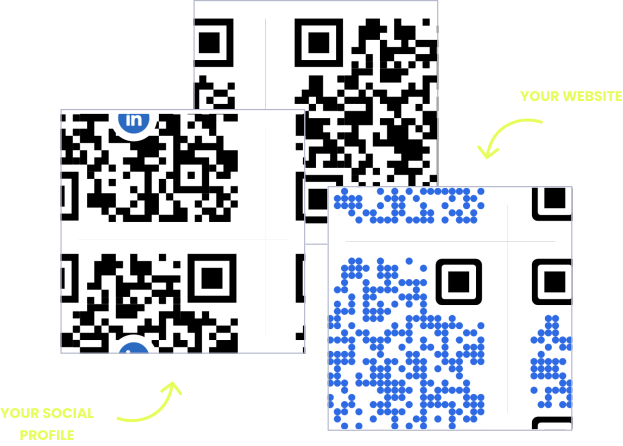
WITHOUT OPENQR
- Old merch and prints link to work you have moved past
- A new release means a new code on new packaging
- Gig posters go dead the moment the show is over
- No idea which prints or posters actually get scanned
WITH OPENQR
- Redirect the same code to your newest work
- One code on merch and prints, updated indefinitely
- Point posters at what is relevant after the show
- Scan analytics show which pieces draw engagement
Creators deserve smarter QR codes
What you print outlives what it should point to. An album sleeve pressed today should lead to your current music, but next year that is a different release. A photo print sold at a show should lead to your portfolio, but the portfolio keeps growing. A gig poster should sell tickets to tonight’s show, and after tonight it should sell something else entirely. A static code freezes that link forever – and forever is longer than any single release, print, or show.
A dynamic QR code from OpenQR keeps the destination as current as your work. The code on the album sleeve, the print, or the poster stays put; where it points is something you change from your dashboard whenever your catalog, portfolio, or calendar moves on. Print merchandise once, then redirect the code from this release to the next, from this exhibition to the next one, without a single reprint.
HOW CREATORS USE OPENQR
One code. Endless ways to use it.
Pick the right QR type for the job – every one is dynamic, trackable, and editable long after it is printed.
Album art that leads to your latest release
A code on a sleeve, sticker, or merch item opens your music – streaming links, a new single, or your full catalog. When you release something new, redirect the same code instead of reprinting the merch you already have in circulation.
USES: URL QR CODEPrints that open your full portfolio
A small code on the back of a print or on a gallery card takes a buyer straight to your online portfolio or shop. As your body of work grows, the code keeps opening the current version – no reprinting cards you have already sold.
USES: URL QR CODEGig posters and show flyers
A code on the poster sells tickets before the show and can point somewhere entirely different after it – a recording, a photo set, or the next tour date. One printed poster, two lives.
USES: URL QR CODEYour contact, saved in one scan
A code on a business card or press kit drops your name, contact, and socials straight into someone’s phone – a client, a venue booker, a journalist – without anyone typing a number by hand.
USES: VCARD QR CODEExhibitions and listening sessions
A code at the entrance or by a piece opens the story behind it, credits, or a related track. Update the context for a new show without reprinting the labels from the last one.
USES: URL QR CODEThree tips for creator QR codes that get scans
Small enough to belong, big enough to scan
A code on a print or sleeve should feel like part of the design, not a sticker slapped on top. Keep it modest, test the scan at the size you will actually print, and give it a little quiet space around it.
One code, many chapters
You do not need a new code for every release or show. Keep one on your recurring merchandise and redirect it as your work moves forward – fewer codes to manage, and every scan across every era of your work counts toward the same total.
Your bio link can be the same code
The short link behind a dynamic QR code works as a bio-page link too. If you want one link that covers your Instagram bio and your printed merch alike, point both at the same OpenQR code and update it in one place.
Built for musicians and photographers
One code, every release
Redirect the same code from this album or show to the next. No new packaging, no new print run, just a dashboard edit.
A portfolio that keeps growing
The code on a print or card opens your current portfolio, not the one from when it was printed. It grows as your work does.
Scan analytics per piece
See which prints, posters, and merch items actually get scanned, and when. GDPR compliant, no IP addresses stored.
One page for everything
The landing page builder puts your music, portfolio, tour dates, and contact behind a single code – on merch, a card, or a poster.
QR solutions creators use most
How OpenQr helps you
Boost engagement and insights through dynamic, customizable QR codes.
Track every scan and optimize smarter
Know exactly when, where, and how your QR Codes are scanned. See device types, locations, and scan frequency – and use data to improve your campaigns and boost ROI.
Read more
Make every QR code uniquely yours
Customize your QR Codes with brand colors, logos, call-to-action text, and even creative frames or edges. Stand out, stay on-brand, and drive more engagement from every scan.
Read more
Update links anytime – even after printing
Dynamic QR codes let you change your URL or content at any time without needing to reprint. Perfect for a new release, an updated portfolio, or redirecting a poster after the show.
Read moreNo credit card required
Why QR codes for creators outlast a single release
QR codes for creators solve a problem that is really about time. A print, a poster, or a sleeve is made once and can circulate for years, while the work behind it keeps moving – a new single follows the last one, a portfolio grows past the pieces printed on today’s cards, a tour replaces last season’s dates. A static link freezes the connection at the moment of printing, so merchandise slowly points at your past instead of your present.
A dynamic code changes that relationship. The printed piece becomes permanent, and the destination becomes something you keep current. Redirect the same code from this release to the next, and everything already in circulation – merch a fan already owns, a card already handed to a client – updates along with you. Nothing gets reprinted, and nothing you have already sold or given away goes stale. Our free vs paid QR generator guide covers the cost side.
The physical piece becomes the doorway
For independent creators, the printed piece is often the only place a fan or client encounters the work outside a screen – so it is worth treating as the doorway it can be. A code on a sleeve or print costs nothing to update once it exists, but it can carry a career’s worth of context if you keep pointing it at what matters now. That is a different relationship to your merchandise than a one-time link: it becomes infrastructure, not a single transaction.
Scans also tell a story printed materials never could. A code on a print that gets scanned tells you the buyer wanted more, not less, of your work. A poster code scanned after the show tells you which audience stayed engaged. Start with the piece you print most – album art or your standard print card – and add codes to posters and press kits as they earn their place. Our guide to QR placement covers where codes get noticed.
Redirect from this album or show to the next. What is already printed keeps working.
The code on a print opens your current work, not the version from when it was made.
A code scanned after the show tells you who stayed engaged – insight print alone never gave.
A printed piece stops changing. What it opens does not have to.