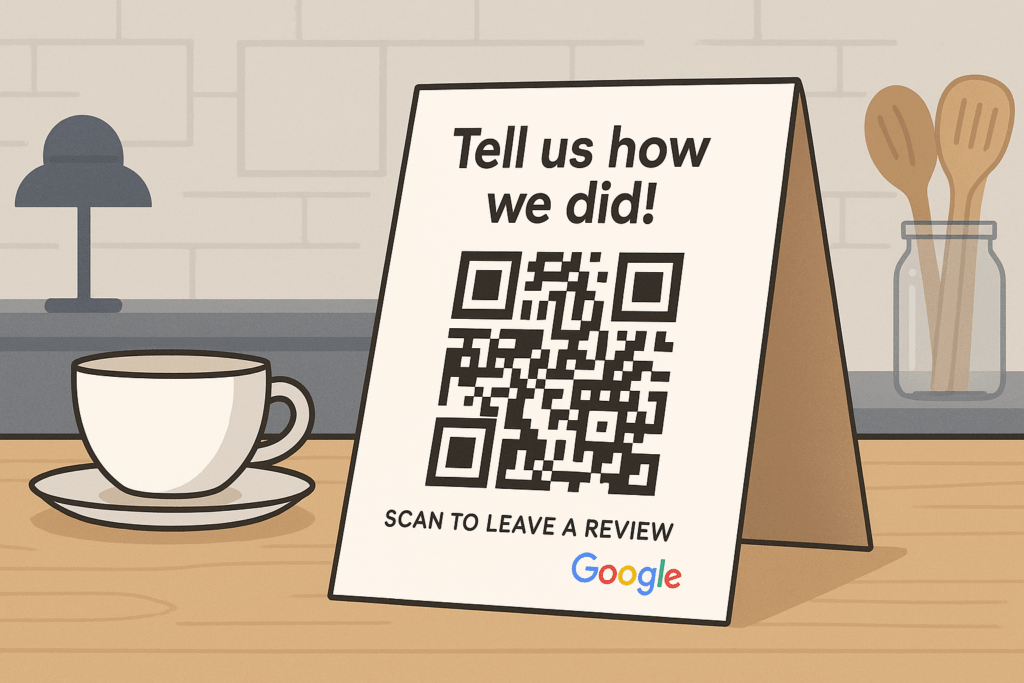
To create a Google review QR code, copy your review link from your Google Business Profile (or build it as https://search.google.com/local/writereview?placeid=YOUR_PLACE_ID), paste that link into a QR code generator, customize the design, then test and print. One scan opens your business’s review form, so a customer can leave stars in seconds with no app and no typing. The whole job takes about five minutes, and with a dynamic QR code you can change the destination later without reprinting anything.
Key takeaways
- Your Google review link is the whole trick. Grab your Place ID, then paste it after
https://search.google.com/local/writereview?placeid=. - Use a dynamic Google review QR code so you can swap the destination after printing.
- Display it where the customer is happiest: at checkout, on a table tent, on the receipt.
- Ask out loud, then point at the code. The QR code removes the typing, not the invitation.
- Never offer incentives. Google treats paid or discounted reviews as fake engagement.
Why a Google review QR code beats a link in a text message
Reviews on your Google Business Profile shape whether someone picks you or the shop two blocks over. The problem is friction: a happy customer still has to search your name, find your listing, tap “write a review,” and sign in. Most give up halfway.
A Google review QR code removes every one of those steps. They point the camera, tap the notification, and land on your review form with your business name at the top. Google itself suggests sharing your review link or QR code on receipts, in thank-you emails, at the end of a chat, and printed in your store. Put it in all four places and let the code do the work.
How to create a Google review QR code in 4 steps
Step 1: Get your Google review link
You need the direct URL to your review form. There are two ways to get it, and both take under a minute.
Option A: copy it from Google Business Profile. Sign in to Google Business Profile on a desktop browser, open your profile, select Read reviews, then Get more reviews, and copy the link. Google can only generate its own review QR code in a computer browser, not on mobile, so do this step on a laptop.
Option B: build the link with your Place ID. This gives you a clean, permanent Google review link that opens the review box directly:
- Open the Google Place ID Finder.
- Type your business name and city, then click your business on the map.
- Copy the Place ID that appears in the popup.
- Paste it at the end of this URL:
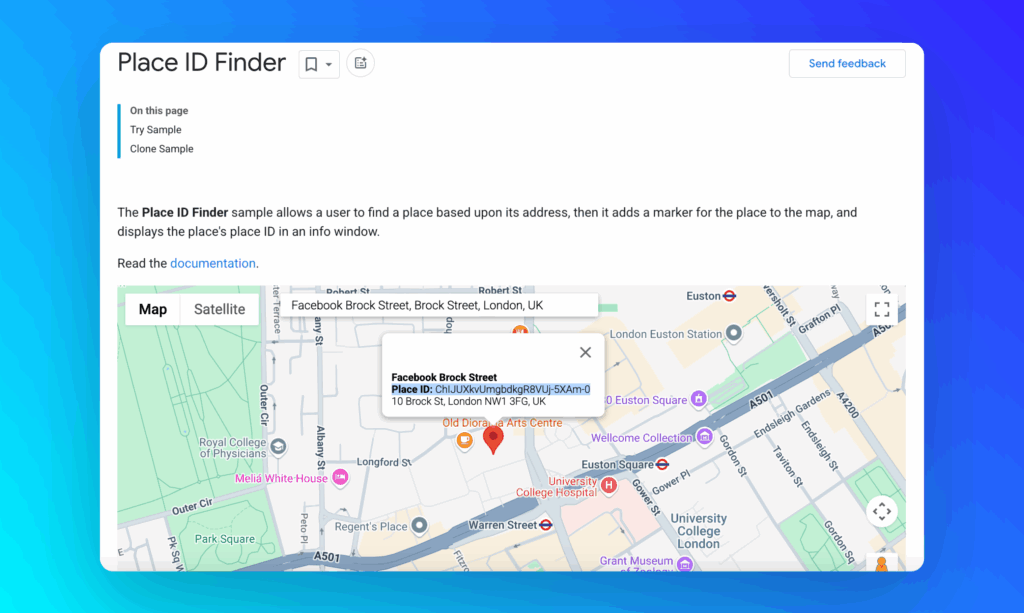
https://search.google.com/local/writereview?placeid=ChIJUXkvUmgbdkgR8VUj-5XAm-0Replace ChIJUXkvUmgbdkgR8VUj-5XAm-0 with your own Place ID. Open the finished link on your phone once to confirm it shows your business name and star rating before you go any further. That check saves you a reprint later.
Step 2: Paste the link into a QR code generator
Now turn that URL into a scannable code. Open the URL QR code generator, choose the website/URL type, paste your Google review link, and give the code a name you’ll recognize, such as “Google reviews, front counter” rather than “QR 4.”
Static codes are free. If you want a QR code generator for Google reviews that keeps working when things change, choose the dynamic option: it stores a short redirect link you can edit later, so a new review link never means new signage. Dynamic codes come with a 14-day free trial, no credit card required.
Pro tip: make one code per placement. Separate codes for the counter, the table tents, and the receipts show you exactly which spot earns reviews and which one is decoration.

Step 3: Customize it so people actually scan it
A plain black code on white works. A branded code gets noticed. Add your colors, put your logo in the center, and frame it with a call to action like “Scan to leave a review.”
Keep three rules in mind: dark code on a light background, a clear margin around the edges, and a logo no bigger than about a third of the code. Test after every change, because a design tweak that breaks the scan costs you the review. See our QR code best practices for the sizing and contrast limits that keep a code readable, or borrow wording from these call-to-action QR code examples.
Step 4: Test it on two phones, then print it
Scan the code with an iPhone and with an Android phone. Confirm both land on your review form, not your homepage and not a competitor’s listing. If either phone struggles, these common QR code scanning problems usually point to the cause. Then print.
Download an SVG for a print shop, or a high-resolution PNG for your own printer, because print quality matters more than size. Choose matte over glossy to cut glare, and keep the printed code big enough to scan from arm’s length. A code the size of a postage stamp on a busy counter will not get used.
Where to display your Google review QR code
Placement decides whether your code gets scanned. Put the Google review QR code where the customer is already stopped, happy, and holding a phone.
- The checkout counter. Eye level, facing the customer, not the cashier. Add “Happy with your visit? Tell Google in 20 seconds.”
- Table tents and café tables. Ideal for a coffee shop or a salon chair: the customer sits, waits, and scans. Use a table tent with a printed frame.
- Receipts and appointment cards. A printed line plus the code at the bottom gets a second look at home, especially for dentists and tradespeople whose work isn’t visible on site.
- Service vans and trucks. A code on the rear doors turns a parked vehicle into a review request. See QR codes on vehicles.
- Your shop window or front door. It catches people right after they’ve left with something good. See QR codes on windows.
- Email signature, invoices, and thank-you texts. The digital twin of your counter card: same link, zero print cost.
For a café, salon, or retail floor, our restaurant, wellness and spa, and retail guides add placements specific to those setups. For general placement ideas, see where to place QR codes for maximum engagement.
How to ask for a Google review: a 15-second script
The code only works if someone asks. Keep it short, keep it warm, and never pressure anyone.
“Thanks so much, glad you enjoyed it. If you have twenty seconds, would you mind leaving us a quick review? It’s this code right here, it opens straight to Google. No app needed.”
Three things make this work:
- Ask at the peak, not the exit. Right after the compliment, the good coffee, or the finished job, not while they’re putting on a coat.
- Point, don’t explain. Tap the sign, then let them scan. A demo takes longer than the scan.
- Skip incentives. Google’s fake engagement policy treats payment, discounts, or free goods offered in exchange for reviews as a violation, and it also bans asking only your happy customers. Ask everyone for an honest review, not five stars.
Track scans, not guesses
A printed sign gives you nothing but a hunch. A dynamic code reports how many people scanned it, on which days, and from where, so you can see that the counter code gets scanned daily while the one in your window hasn’t moved in a month. Move the window sign, or replace it.
Dynamic codes also protect your workflow: if you ever change your Google review link, edit the destination in the dashboard and every printed code follows. No reprint, no wasted vinyl. Details in how QR code tracking works and how to edit a QR code.
Google review QR code: your questions answered
Google’s own review link and QR code are free inside your Business Profile. A dedicated QR code generator for Google reviews adds customization, scan analytics, and the ability to edit the destination later. With OpenQR, static codes are free and dynamic codes come with a 14-day free trial, no credit card required.
No. Modern iPhones and Android phones read QR codes with the built-in camera app: open the camera, point it at the code, and tap the banner that appears. The review form opens in the browser. Customers already signed in to a Google account just start typing.
With a dynamic QR code, yes. You edit the destination in your dashboard and the printed code keeps working. With a static code, the destination is baked into the pattern, so any change means a new print run.
Use static only for a one-off sticker, flyer, or event that you’re happy to reprint. Use dynamic for anything permanent, such as counter cards, window decals, vehicle graphics, and table tents, because those are the assets you don’t want to redo. Our static vs dynamic QR code guide covers the difference in more detail.
Nobody can promise a number, and you should be skeptical of anyone who does. What you can control: the number of placements, whether staff ask out loud, and how easy the scan is. Test one placement for a month, check the scan count, and put the winning position everywhere.
Yes. Google’s own help center explains how to create and share a review link or QR code. What isn’t allowed is offering payment, discounts, or freebies in exchange for reviews, discouraging negative reviews, or asking only happy customers. Ask everyone, equally, with no strings.
Create your Google review QR code now
You have the link, the method, and the placements. The only step left is the code itself.
Generate your Google review QR code in the OpenQR URL QR code generator: paste your review link, pick your colors, add your logo, and download a print-ready file. Static codes are free, and dynamic codes (editable and trackable) come with a 14-day free trial, no credit card required.
Print your first code today and start asking.