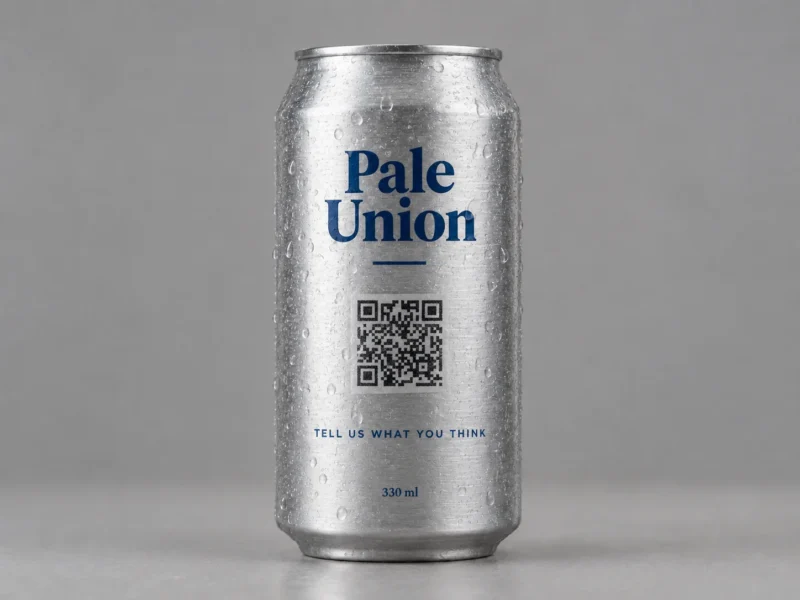
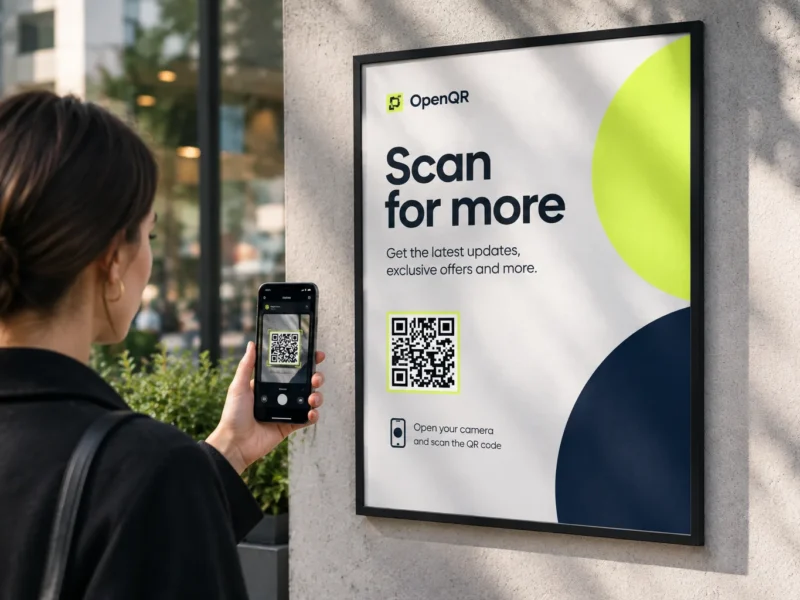
A QR code behaves differently on every surface you print it on. On a wine bottle it curves. On a business card it has about 20mm to work with. On corrugated cardboard it fights ink bleed. The same design that scans perfectly on a flyer can fail on glossy packaging, and you usually find out after the print run is paid for.
These guides cover the materials QR codes actually get printed on, with the minimum size, contrast and quiet zone each one needs, plus examples you can copy. Every code here is a dynamic QR code you can edit after printing, so a wrong link or an outdated menu becomes a dashboard change instead of a reprint. Before you send anything to print, check the QR code best practices and the print guide.