
Food packaging is the one pack where the law already decides most of what is printed, the information changes by batch, and the pack itself goes through a fridge, a freezer or a greasy delivery bag before anyone scans it. A QR code on food packaging cannot replace the allergen list, but it can carry everything the label has no room for, tie each pack to its batch and best-before date, and send a shopper the right message if that batch is ever recalled. Decide what stays on the label, what goes behind the code and which identifiers the code carries before the artwork is approved.
The benefits of using QR codes on food packaging
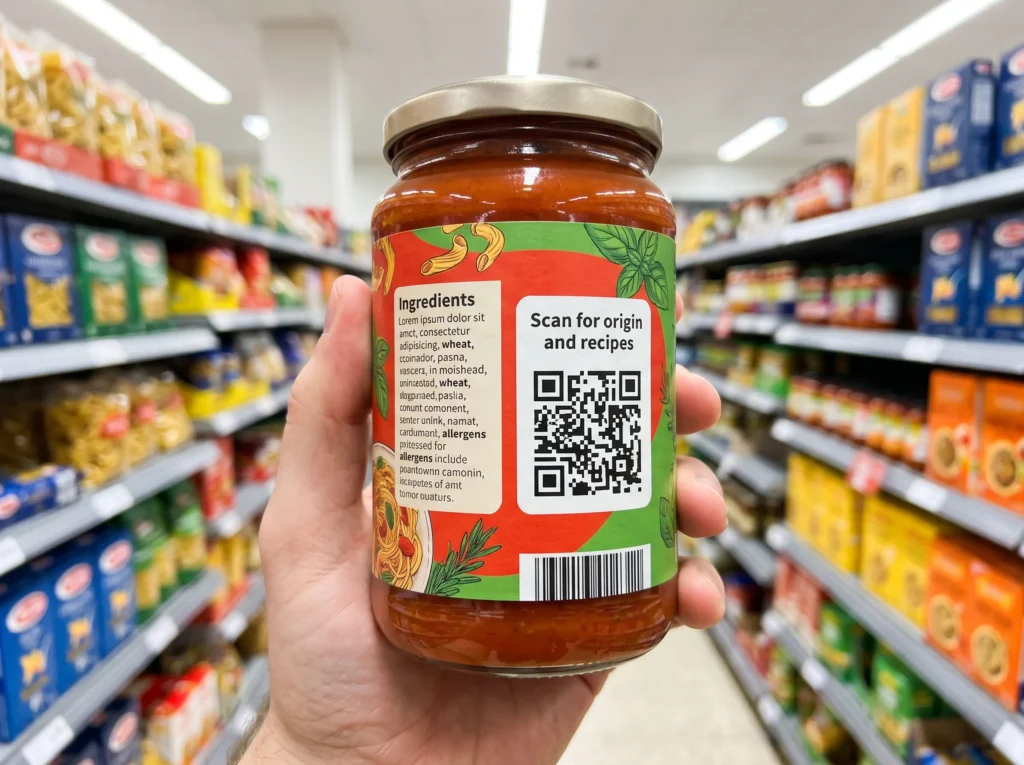
Shoppers read food labels more closely than any other pack, and they want more than the label can hold: where the ingredients come from, how the product was made, what to cook with it, how to recycle the tray. A QR code on food packaging carries all of that without making the label smaller or more crowded. It builds a supply chain of trust, because a brand that shows the farm, the batch and the certificates has nothing to hide, and it makes the pack itself more eco-friendly by moving long text, leaflets and recipe cards onto a page.
It is also packaging for the future. Retailers are preparing their tills to read 2D codes by the end of 2027, and a GS1 Digital Link QR code can carry the product number for checkout and the batch and date for traceability, while opening a page for the consumer. For marketing, every scan is counted by day, city and device, so you can see which products and which recipes get attention and plan the next campaign on real numbers instead of guesses.
What a food packaging QR code has to handle
A label the law already fills
Ingredients, allergens, nutrition, dates, weight and the producer’s address must be printed on the pack. The QR code has to fit around all of that and add to it, never replace it.
Information that changes by batch
Batch numbers, best-before dates and sometimes origin change with every production run. A code that knows only the product cannot tell a shopper whether their pack is affected by a recall.
Fridges, freezers and grease
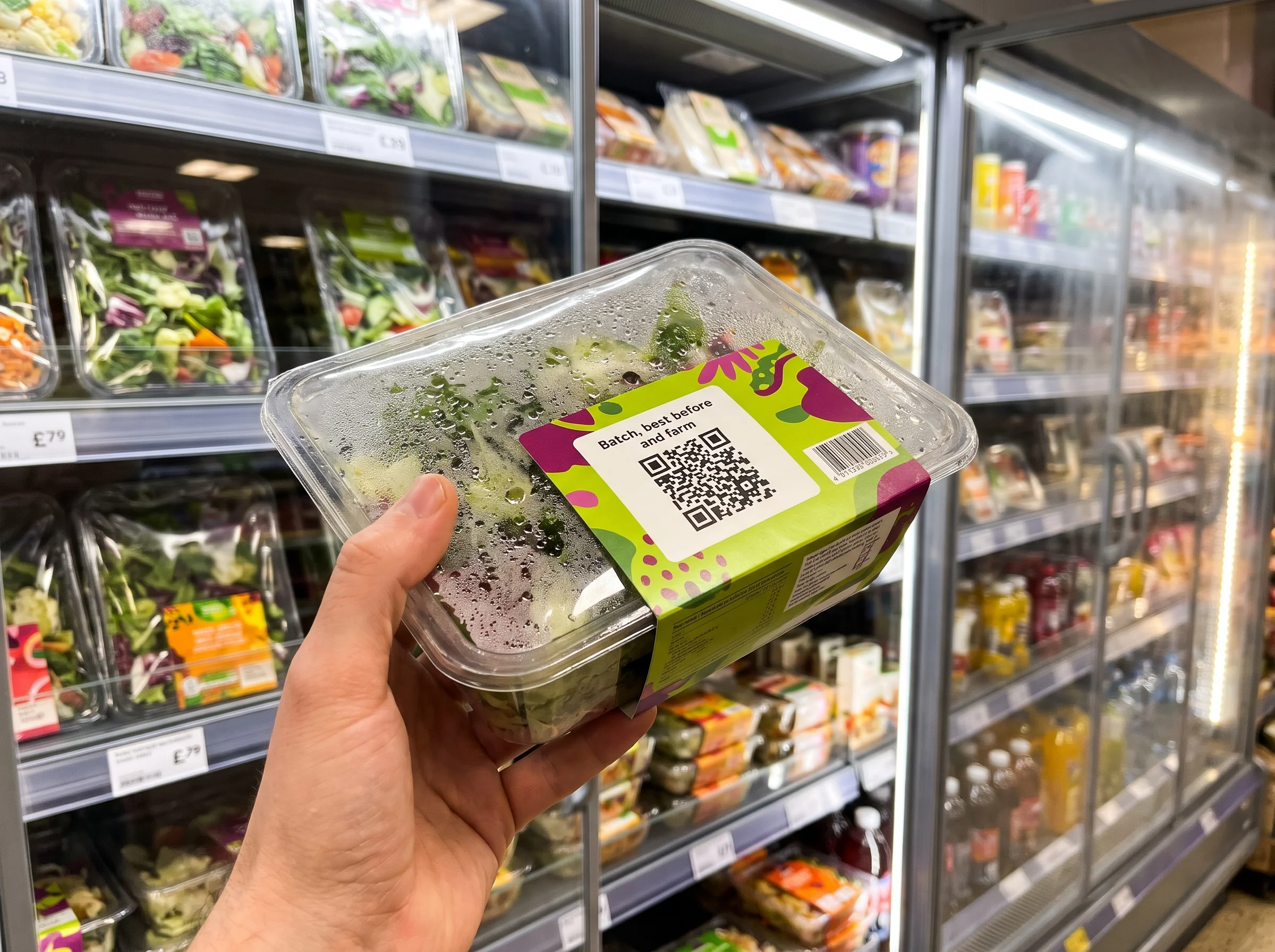
Chilled packs come out wet with condensation, frozen packs carry frost, flow wrap wrinkles and takeaway boxes soak up oil. The code has to survive the cold chain and the kitchen, not just the printing press.
Packs that live on shelves and in cupboards
Food packaging is printed in huge runs and sits in stores and pantries for months. The page behind the code must stay correct for the whole shelf life of every pack already sold.
QR solutions that work best on food packaging
Three mistakes that make a food packaging QR code a problem
Moving required information behind the code
Allergens, ingredients and the use-by date must be on the pack itself for almost all foods. A code can repeat and explain them, but a label that says scan for allergens instead of listing them breaks the rules and leaves out every shopper without a phone.
One code for every batch
A product-level code opens the same page for every pack ever made. When one batch is recalled, it cannot tell the shopper whether their pack is affected. Put the batch in the code, or at least on a page the code opens, and plan the recall message before you need it.
Gloss film over a chilled pack
Condensation on a cold, glossy film scatters light into the camera, and a shrink sleeve stretches the code as it shrinks. Use a matte window over the code, keep it on a flat face of the pack, and ask the printer to pre-distort artwork for shrink sleeves.
WHAT TO LINK FROM YOUR FOOD PACKAGING
One code. Endless ways to use it.
Pick the right QR type for the job – dynamic codes stay editable and trackable for the whole shelf life of every pack.
Allergens and ingredients, explained
Repeat the allergen information from the label in large, clear type, add may-contain notes and the full ingredient story, and offer it in every language you sell in. The label stays legal, the page answers the questions it cannot.
USES: URL QR CODEFrom the farm to this pack
A GS1 Digital Link QR code carries the product number and the batch, and opens a page with the origin, the producer and the certificates for that batch. It is the supply chain of trust a shopper can check in the aisle.
USES: GS1 DIGITAL LINKRecipes for what is in the box
Cake mixes, sauces, spices and meal kits sell more when people know what to make. Link the pack to recipes or a cooking video, and change them every season without touching the artwork.
USES: URL QR CODENutrition sheets and product specs
Upload the full nutrition table, the product specification or the certificate of analysis as a PDF and OpenQR hosts it. Retail buyers, caterers and shoppers with special diets get the detail the label cannot hold.
USES: PDF QR CODEHow to recycle this pack
Trays, films, lids and sleeves are often recycled differently. A code that opens the recycling instructions for each part, for each country, keeps the pack eco-friendly in practice and not just in the claim.
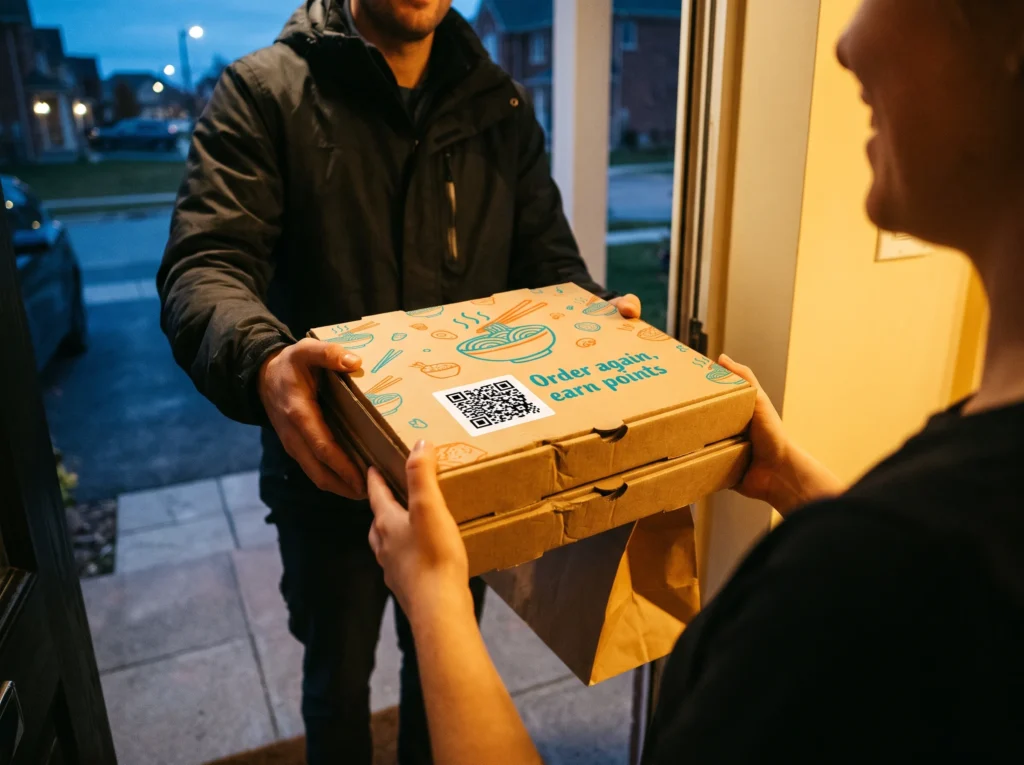
USES: URL QR CODETakeaway: order again, review, earn points
Pizza boxes, coffee cups, meal kits and delivery bags reach the customer at home. A link list QR code opens reordering, the review page, the loyalty programme and a coupon for next time, all from one code on the box.
USES: LINK LIST QR CODEWITHOUT OPENQR
- Scan for allergens printed instead of the allergen list
- One product code, so a recall reaches every pack or none
- Condensation on gloss film scattering the scan in the fridge
- A reprint for every recipe, offer or website change
WITH OPENQR
- Required information on the label, more detail behind the code
- Batch and date carried in the code, recall page ready per batch
- Matte window over the code on a flat face of the pack
- Edit the page behind the code for the whole shelf life
What goes wrong with QR codes on food packaging
Food packaging fails on rules and batches before it fails on print. The rules say what must be printed on the pack, and a QR code that is used to move allergens or the ingredient list off the label puts the product in breach and leaves out every shopper without a phone. Batches are the second trap. Most packs carry a code that knows the product and nothing else, so when one production run has a problem the brand has no way to show the right message to the people holding that run, and no way to tell everyone else their pack is fine.
The third problem is the journey. Food packaging is printed in huge runs, chilled, frozen, stacked in delivery bags and kept in cupboards for months, and the page behind the code has to stay right for all of that time. A static QR code fixes the destination on the day of printing. A dynamic GS1 Digital Link QR code keeps the product number and the batch in the code and the page editable, so recipes, offers and recall notices change from the dashboard while the packs stay on the shelves.
What stays on the label, what goes behind the code
In the EU, the food information regulation (Regulation 1169/2011) lists what must appear on prepacked food, and for almost every food that information has to be on the pack or a label attached to it. A QR code adds to the label; it does not replace any of it. The one notable exception is wine, where the ingredient list and nutrition declaration may be provided through a QR code, which our guide to QR codes on bottles and cans explains. Other markets have similar rules, so check the requirements for each country you sell in.
| Information | On the pack | Behind the code |
|---|---|---|
| Name, net quantity, producer | Required | The brand story and contact options |
| Ingredients with allergens emphasised | Required | Larger type, may-contain notes, translations |
| Nutrition declaration | Required for most prepacked foods | Per-portion values, full specification |
| Best-before or use-by date, batch | Required | What the date means, storage advice, recall status |
| Storage and use instructions | Required where needed | Recipes, cooking videos, serving ideas |
| Origin and sourcing | Required for some foods | Farm, producer and certificates for the batch |
| Recycling | Usually a symbol | Step-by-step instructions per country |
This is a summary to help plan the label, not legal advice. Labelling rules differ by product and by country and they are being revised, so confirm the requirements for your products with your food safety or regulatory advisor before artwork is approved.
GS1 Digital Link on food: batch, dates and recalls
A GS1 Digital Link QR code is a web address built from GS1 identifiers. The till reads the product number from it, and a phone opens the page. On food, the identifiers that matter most are the ones that change by batch.
| GS1 identifier | What it carries | Why it matters on food |
|---|---|---|
| 01 (GTIN) | The product number, the same as the barcode | Checkout, stock and the product page |
| 10 (batch or lot) | The production run | Recalls and traceability for that batch |
| 15 (best before) | The best-before date | Date-specific advice and stock rotation |
| 17 (use by or expiry) | The use-by date | Safety dates on chilled and fresh food |
| 3102 and similar (net weight) | Weight for variable-measure items | Pricing at the till for weighed products |
Under the GS1 US Sunrise 2027 initiative, retailers are preparing their tills to read 2D codes at checkout by the end of 2027. The linear barcode is not being banned, and GS1 expects both to appear on packs until almost all retailers can read 2D, so print the QR code alongside the barcode for now. In the United States, the FDA’s food traceability rule (FSMA 204) requires additional traceability records for foods on its Food Traceability List from 20 July 2028, and a code carrying the batch is one way to keep the lot code with every pack. The full picture is in our guide to GS1 QR codes for industry compliance.
Recalls are where a batch in the code pays off. Give each batch its own dynamic GS1 Digital Link code, all pointing at the product page, and if one batch is recalled you change only that batch’s destination to the recall notice. Shoppers holding other batches still see the normal page, and the scan counts show how many affected packs have been checked. Each batch code is one dynamic code on your plan; producers with many batches can create them with the OpenQR API and contact us for a plan sized to production. In OpenQR the GTIN and the other identifiers are fixed when the code is created and only the destination changes. Build the codes with the GS1 QR code generator, and see the GS1 application identifier list for the full set. The GTIN itself has to be licensed from your national GS1 organisation.
Cold, wet and greasy: food packaging surfaces
| Pack | For the QR code | Why it matters |
|---|---|---|
| Chilled packs with gloss film | Matte window over the code | Condensation on gloss scatters the scan |
| Frozen food | Code on the box or sleeve, not the bag | Frost and creased bags hide modules |
| Flow wrap and pouches | Flat area away from seals and folds | Seals crimp the film and wrinkles bend the code |
| Shrink sleeves | Printer pre-distorts the artwork | The sleeve stretches unevenly as it shrinks |
| Clear lids and windows | White patch behind the code | Otherwise the food shows through the light modules |
| Takeaway boxes and kraft paper | Size up a few millimetres, keep away from grease spots | Kraft absorbs ink and oil darkens the light modules |
| Cups and round tubs | Keep the code narrow relative to the diameter | A wide code on a tight curve distorts |
Put the code on the back or side panel near the nutrition and allergen information, where shoppers already look for detail, with a line saying what the scan opens: allergens and origin, recipes inside, recycle this pack. On a takeaway box, put it on the lid, where it faces the customer when the order arrives. Size the code at 20 mm or more for a pack scanned in the hand; GS1 also sets module size limits for codes read at the till, which the GS1 QR code generator page covers. For curved containers, the rule is in QR codes on bottles and cans, and for labels applied after printing, in QR codes on stickers and labels.
Make every food packaging code dynamic before the artwork is approved. A static QR code encodes the destination in the pattern, so it cannot be changed once millions of packs are printed and it cannot be converted to dynamic later. See static vs dynamic QR codes, and why a product QR code must never expire. For packaging strategy beyond food, see QR codes on product packaging and QR codes for consumer goods.
Then test a real pack, the way it will be handled. Ask for a printed sample on the actual film or board, fill it, chill or freeze it for a few hours, and scan it straight out of the fridge on two phones, one of them a few years old, under supermarket-style lighting. For takeaway packaging, put a little oil on the box first. If it fails, the fix costs one sample instead of a print run.
Allergens, ingredients and dates stay on the pack. The code adds detail, it never replaces them.
One dynamic code per batch lets you redirect only the recalled run.
Tills are moving to 2D by the end of 2027. Print both until your retailers are ready.
Chill or freeze a printed sample and scan it straight from the fridge.